
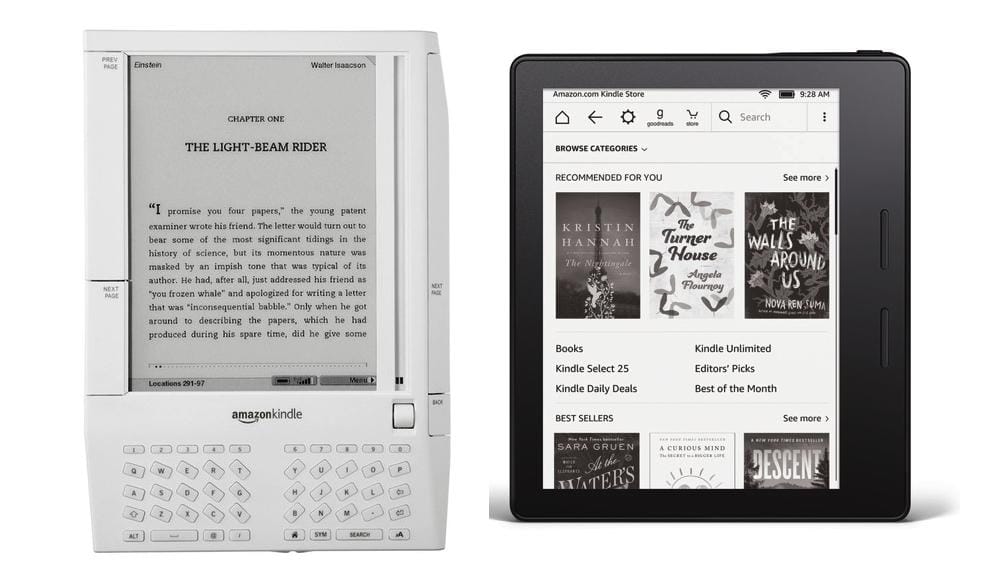
Amazon has disabled direct access to the Kindle Store on older devices, particularly those released more than 10 years ago.
Key Change:
- Users can no longer browse, purchase, or borrow books directly on these devices
Affected Kindle Models:
- Kindle (2nd Generation International)
- Kindle DX International
- Kindle Keyboard
- Kindle (4th & 5th Generation)
This change officially took effect in August 2022, marking a clear cutoff point for legacy device support.
Can You Still Use Your Old Kindle?
Relax. Amazon didn’t turn your Kindle into a paperweight overnight.
You can still:
- Read all previously downloaded books
- Purchase books from Amazon using your phone or computer
- Sync new purchases to your Kindle
- Transfer books manually via USB or email
So yes, your Kindle still does the one thing it was designed for. Revolutionary.
Why Is Amazon Ending Support for Older Kindles?
Now we get to the part where companies say “security” and quietly mean “also business.”
1. Security Limitations
Older Kindle devices rely on outdated encryption protocols like TLS 1.0 and 1.1, which are no longer considered secure for online transactions.
Since these devices can’t support modern security updates due to hardware limitations, Amazon had two choices:
- Keep supporting insecure systems
- Or cut off store access
They chose the option that doesn’t give their legal team nightmares.
2. Maintenance Costs
Supporting older devices requires:
- Legacy system updates
- Compatibility fixes
- Ongoing technical support
All of that costs money for users who probably bought their Kindle in 2010 and haven’t spent ₹1000 since.
3. Subtle Push Toward Upgrades
Amazon also offered:
- 30% discount on new Kindle devices
- $40 ebook credit
That’s not generosity. That’s a nudge. A very obvious one.
The Bigger Picture: A Growing Tech Trend
This isn’t just about Kindle. It’s part of a wider industry pattern.
📡 1. Network Shutdowns
Older Kindles relied on 3G connectivity, which has been phased out globally. No network = no online features.
🔄 2. File Format Evolution
Amazon is moving away from older formats like MOBI toward newer, more flexible formats like EPUB and Kindle-specific enhancements.
🔐 3. Ecosystem Control
Modern devices are designed to:
- Keep users inside Amazon’s ecosystem
- Deliver seamless syncing across apps and devices
- Encourage digital purchases over manual transfers
Translation: convenience for users, control for Amazon.
Real-World Impact: What Users Experience
Let’s say you’re using a Kindle Keyboard from 2010.
Before:
- Browse books directly
- Buy instantly
- Read immediately
After:
- Open Amazon on your phone
- Buy the book
- Sync to Kindle
Not a disaster. Just… annoying enough to make you consider upgrading.
Is This Planned Obsolescence or Just Progress?
Here’s the debate everyone loves to have:
Argument 1: Necessary Upgrade
- Technology evolves
- Security standards improve
- Old hardware can’t keep up
Argument 2: Planned Obsolescence
- Devices still function perfectly
- Features are removed, not broken
- Users are pushed toward buying new products
Reality sits somewhere in the middle. Companies don’t kill devices outright. They just make them inconvenient enough that you do it yourself.
What Should Kindle Users Do Now?
If you’re using an older Kindle, your options are simple:
✔ Keep Using It
- Ideal for reading existing books
- Works fine if you don’t mind extra steps
✔ Use It Alongside Other Devices
- Buy books on your phone or laptop
- Sync to Kindle for reading
✔ Upgrade (If You Care About Convenience)
- Faster performance
- Better display
- Full access to Kindle Store
Final Thoughts
Amazon didn’t shut down older Kindles. It just removed their independence.
Your device still works. It still reads books. It just depends on other devices to do anything new. Which is kind of ironic for something that was supposed to simplify reading in the first place.
This move reflects a bigger truth about modern tech:
Devices don’t become obsolete when they stop working.
They become obsolete when they stop being convenient.
And convenience, unfortunately, is something companies control.
