
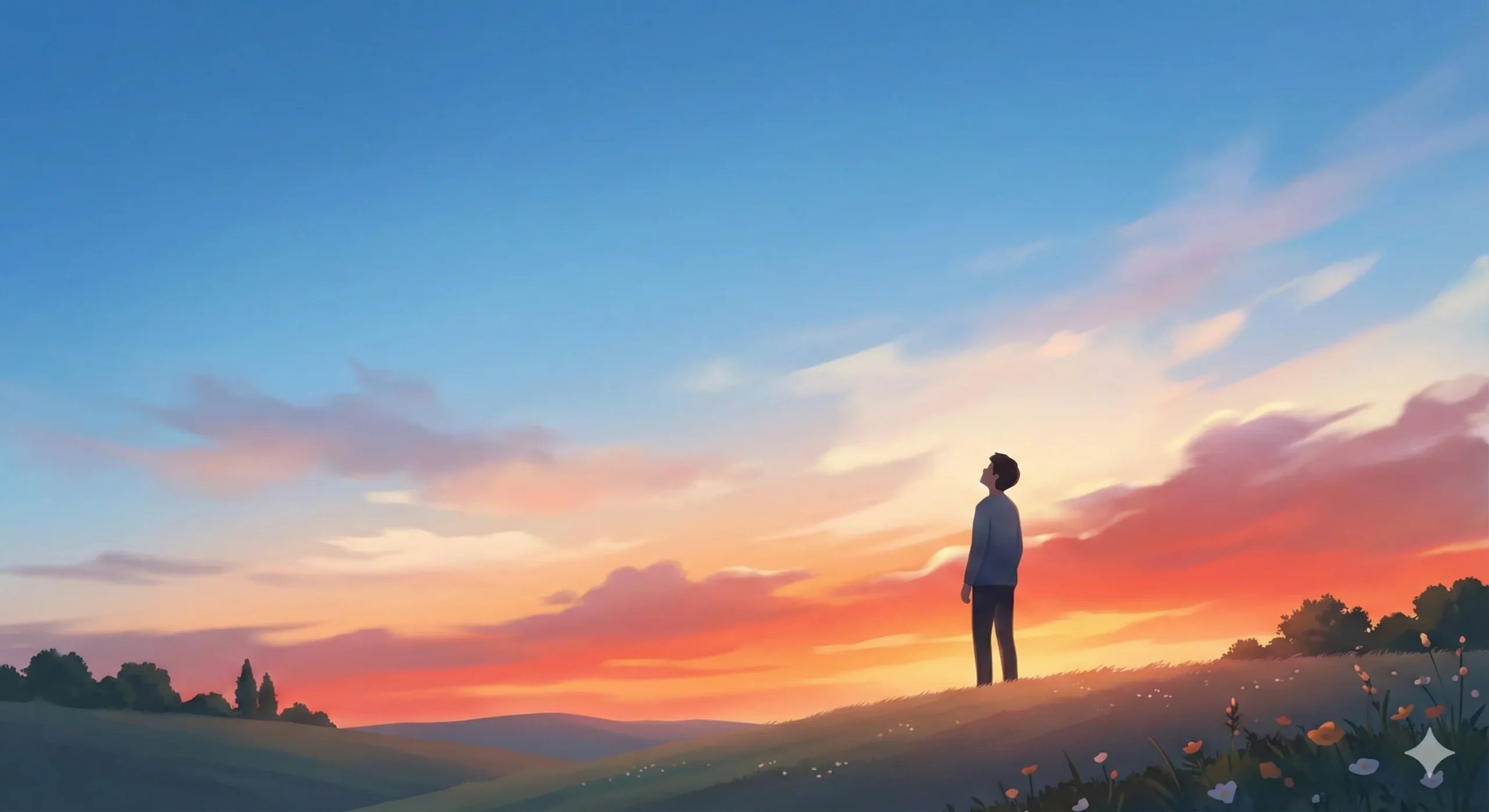
Look up at the sky. It’s blue. Look again in the evening. Suddenly it’s red, orange, pink, sometimes purple like the sky joined a fashion show without telling you.
Same sky. Same Sun. Totally different vibes.
Naturally, your brain goes, “Is this some kind of prank?”
Relax. It’s science. Boring name. Fun explanation. I’ll translate.
The Short Answer (For People With Zero Patience)
The sky is blue because Earth’s atmosphere bullies blue light the most.
Sunsets are red because, by evening, blue light gets tired and leaves early.
That’s it.
But since you’re still here, let’s make this actually make sense.
The Sun Is White Light (Not Yellow, Sorry)
Despite every child’s drawing ever, sunlight is not yellow.
It’s white light, which is basically a mix of all colors: red, orange, yellow, green, blue, indigo, violet.
When sunlight hits Earth’s atmosphere, it crashes into tiny air molecules like oxygen and nitrogen. This is where the drama starts.
Why the Sky Is Blue During the Day
Enter: Rayleigh Scattering (Yes, That’s a Real Thing)
Shorter wavelengths of light like blue and violet scatter more easily when they hit air molecules.
Think of it as blue light being hyperactive and bouncing everywhere.
Now, you’re wondering:
“If violet scatters more, why isn’t the sky violet?”
Good question. Two reasons:
- The Sun emits more blue light than violet.
- Human eyes are better at seeing blue than violet.
So your eyes vote blue. Democracy wins. Sky turns blue.
Why Sunsets Are Red, Orange, and Pink
The Sun Takes the Long Way Home
During sunset, the Sun is low on the horizon. Its light has to travel through way more atmosphere to reach your eyes.
That long journey means:
- Blue and violet light get scattered out of the path
- Reds and oranges survive because they scatter less
By the time sunlight reaches you, it’s basically all warm colors.
Congratulations, you’re watching filtered sunlight.
Why Sunrises and Sunsets Look Different Every Day
Some days it’s soft orange.
Some days it’s aggressively red like the sky is mad at you.
That’s because of:
- Dust
- Pollution
- Smoke
- Humidity
- Tiny particles floating around minding their own business
More particles = more scattering = more dramatic colors.
Beautiful, but also slightly concerning for your lungs.
Why the Sky Isn’t Green, Purple, or Whatever Else
Because physics has rules and refuses to be artistic just for fun.
- Blue scatters best → daytime sky
- Red survives long distances → sunsets
- Green doesn’t get special treatment → ignored
- Purple tries but fails → sad, honestly
Quick Recap (So You Sound Smart Later)
- The sky is blue because blue light scatters the most in the atmosphere
- Sunsets are red because blue light gets scattered away on the longer path
- The Sun didn’t change color
- The sky is not broken
- Science did this, not magic
Final Thought Before You Scroll Away
Every time you see a sunset, you’re watching light travel millions of kilometers, fight through Earth’s atmosphere, lose half its colors, and still show up looking amazing.
And you’re just there like, “Nice sky,” while checking your phone.
Physics is working way harder than we appreciate.