
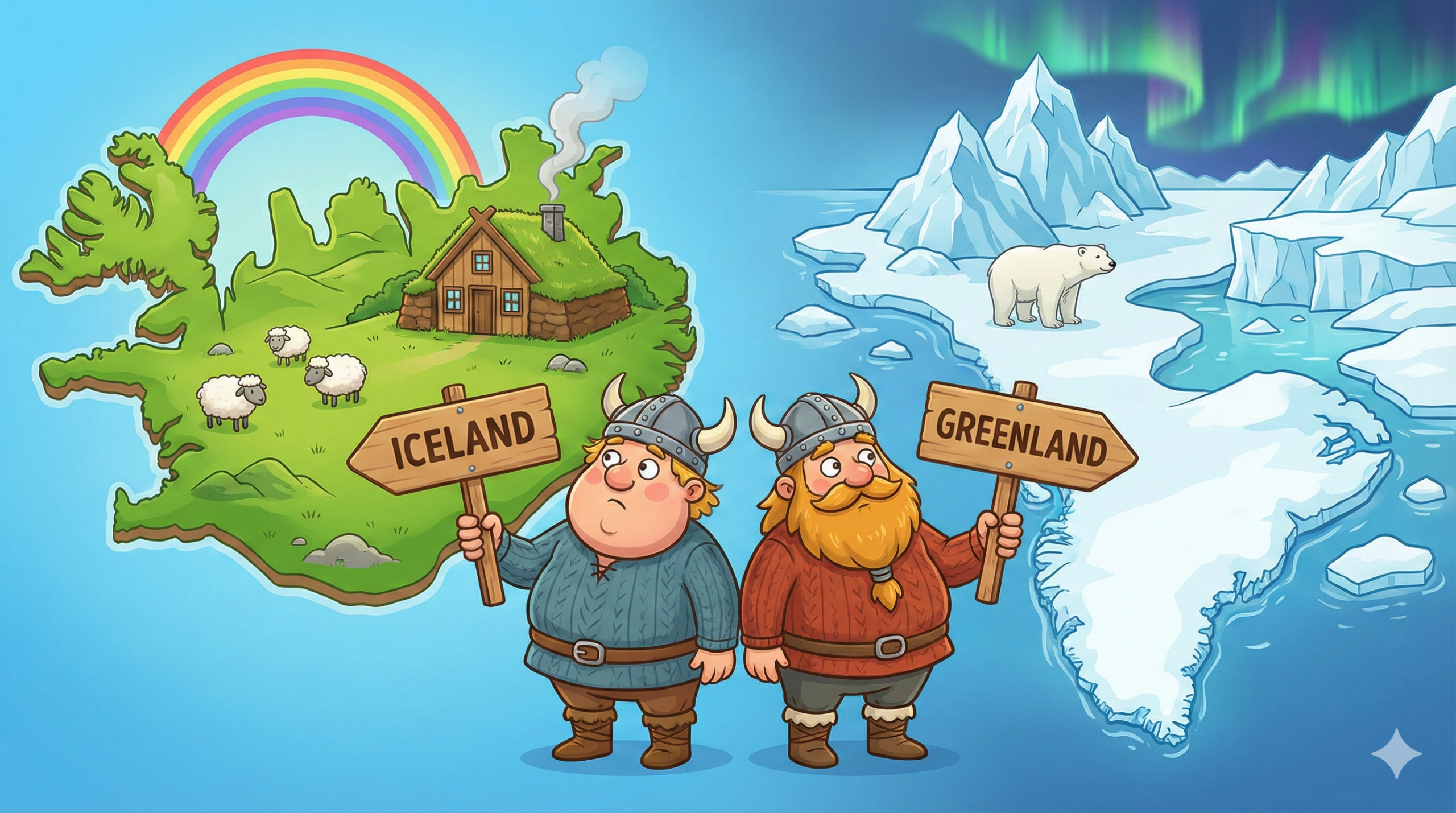
Humanity has done some questionable things. Inventing glitter. Approving low-rise jeans. And naming two giant chunks of land Iceland and Greenland in the most chaotic, misleading way possible. If you’ve ever stared at a map and thought, “This makes zero sense,” congratulations, you’re normal.
Today we’re diving into the true history behind these backwards names, and spoiler: it involves Vikings, drama, accidental marketing strategies, and one guy who seriously needed therapy.
The Great Naming Plot Twist
Iceland: The Land That Got Catfished By Its Own Name
If you imagine Iceland as a giant ice cube floating in the North Atlantic, relax. It’s not Antarctica’s cousin. Iceland is mostly green, cozy, volcanic, geothermal, and probably judging the rest of the world for not recycling.
So why the icy name?
Simple: one Viking had a bad day.
Enter Flóki Vilgerðarson, a Norse explorer whose vibe was basically:
“I’m going to discover new lands because everything annoys me.”
Legend says he sailed to a perfectly decent island, saw a bit of ice floating in a fjord, instantly snapped, and named the entire place Ísland (Iceland). Peak overreaction.
Historians debate whether Flóki was:
- legitimately upset by seeing ice
- trying to scare other settlers away
- or just the original king of dramatic rebranding
Either way, Iceland got stuck with a name that makes tourists pack three coats too many.
Greenland: The World’s First Real-Estate Scam
Now Greenland… oh boy.
Greenland is covered in ice. Like, 80% “I-can’t-feel-my-face” ice. So why call it Greenland?
Because Erik the Red was basically the Viking version of a real-estate agent with a questionable moral compass.
After getting kicked out of Iceland for “anger issues” (shocking), Erik found a massive frozen island and went:
“Hmm. This is unlivable. Perfect. I’ll call it Greenland so people think it’s tropical.”
Yes. Greenland is named because Erik wanted other settlers to join him in his frosty exile.
The man invented clickbait before the internet existed.
Imagine convincing someone to move by saying:
“Bro, it’s so green.”
Meanwhile the island is 99% “winter is eternal and so is your regret.”
So Why Didn’t They Switch the Names Later?
You’d think eventually someone would have said:
“Hey, community meeting, the names are backwards. Should we fix this?”
But nope.
The names stuck because:
- medieval people weren’t exactly obsessed with accuracy
- maps were expensive
- Vikings were stubborn
- and no one wanted to redo all their carved wooden signs
Also, correcting the names would have required admitting that Erik the Red lied. Vikings didn’t do vulnerability.
Climate Didn’t Help Either
Iceland gets warmed by the North Atlantic Current, giving it surprisingly mild weather (for a place with volcanoes and puffins).
Greenland sits farther north, catching cold winds and freezing everything except the occasional confused tourist.
So even nature was like:
“Sure, let’s keep the chaos going.”
What This Teaches Us About Humans (Nothing Good)
The story of Iceland and Greenland proves three timeless truths:
- A single dramatic Viking can ruin cartography forever.
- Marketing has been shady since 982 AD.
- Names don’t matter if your landmass has personality.
Gyms called “Planet Fitness” aren’t planets. Greenland isn’t green. Humans just name things badly and then pretend it’s fine.
Conclusion ?
Next time someone says history is boring, remind them that a guy literally named an ice desert “Greenland” to make it sound cute.
Meanwhile Iceland is chilling (literally and emotionally), growing moss, taking geothermal spa selfies, and wondering why everyone keeps expecting it to be Siberia.

December 11, 2025 at 11:13 am
Loved how simple this explanation was. I always wondered why the names are flipped. Great read!